News Details

N E W S   D E T A I L

人形机器人是风口还是泡沫?

Is a humanoid robot a tuyere or a bubble?

2026-09-13 1 Reading
Over the past few years, the AI boom has been shifting from “large models” toward a more tangible direction—humanoid robots. From Tesla Optimus, Figure AI Figure 02, to Boston Dynamics Atlas, Agility Robotics Digit, to Unitree G1/H1, humanoid robots are moving from laboratories to real scenes such as factories, warehouses, scientific research, etc. But a question is more and more worth thinking about: whether the humanoid robot is a real industrial outlet, or another

Is a humanoid robot a tuyere or a bubble?

Over the past few years, the AI boom is moving from "big models" to a more figurative direction--Humanoid robot。
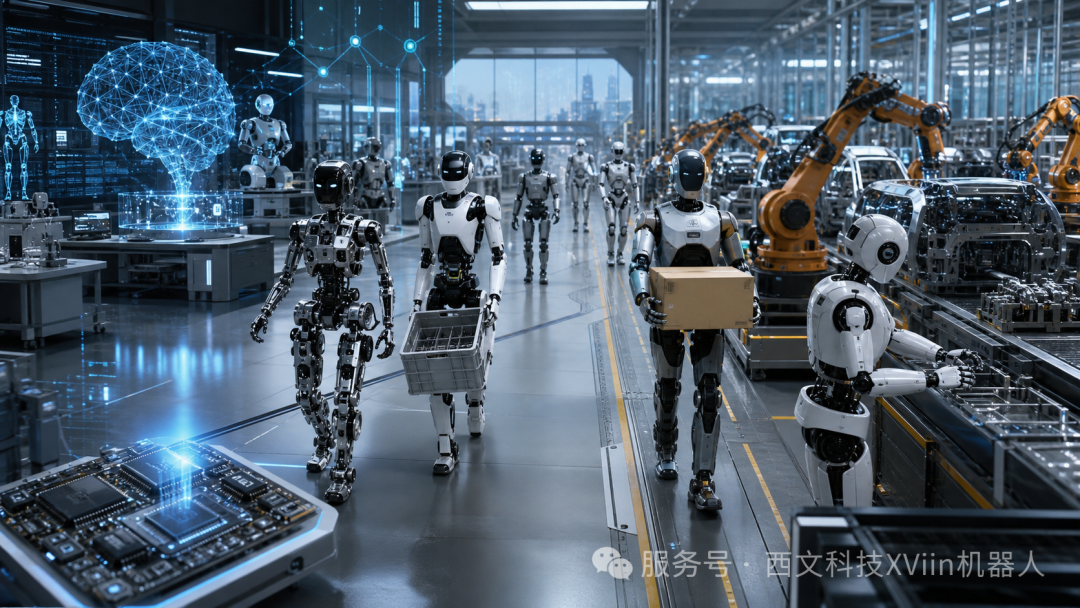
From Tesla Optimus, Figure AI Figure 02, to Boston Dynamics Atlas, Agility Robotics Digit, to Unitree G1/H1, humanoid robots are moving from laboratories to real scenes such as factories, warehouses, scientific research, etc.
But one question is increasingly worth thinking about:Is humanoid robot a real industry outlet or another capital bubble?The answer may not be black and white.

Why did 1. humanoid robot suddenly fire?

Traditional robots are usually "specialized devices". They are installed in a fixed position to complete standardized work such as welding, handling, and assembly. The imagination of humanoid robots lies in:Let robots enter the world that humans have designed.
Most of the shelves, tools, stairs and operating stations in the factory are designed according to the human body structure.
Therefore, instead of remaking the entire production environment, it is better to let the robot gradually have a human-like body structure and motor ability.
That's why Tesla, Figure, Boston Dynamics, Unitree and others are exploring humanoid robots.
But an important change is taking place in the industry: in the past, people focused on "whether robots can walk", and now they are starting to focus on:Can a robot work?
Image

2. real competition, not just "mechanical body"

A truly useful humanoid robot needs to solve more than just motion problems. First, it needsunderstand the world. Cameras, depth sensors, force sensors, etc., allow the robot to obtain environmental information. Secondly, it needsUnderstanding the World. Visual language models (VLM) can help robots understand objects, environments, and human language instructions.
Further, it is very popular in recent years.VLA——Vision-Language-ActionThat is, the combination of vision, language and action. For example, the person says to the robot, "Take the cup on the table to the kitchen." The robot needs to identify where the cup is, understand the location of the "kitchen", plan the route, control the robotic arm and dexterous hand to complete the grasp, and constantly adjust the movement according to the real environment. This means that the robot is moving from "executing a fixed program"Understand the task and act autonomouslyTransformation.
Image

3. Figure, Optimus, Atlas, the routes are diverging

Different companies are exploring different technology routes.Figure AIFocus on the combination of artificial intelligence and robots, hoping to make robots complete more complex tasks through vision, language and action models.
Tesla OptimusMore attention is paid to robot scale manufacturing, cost control and industrial scene applications.
Boston Dynamics AtlasIt has accumulated strong motion control ability for a long time, and is representative in complex motion and robot body.
Agility Robotics DigitIt focuses more on business scenarios such as logistics and warehousing.
Unitree G1/H1It allows humanoid robots to gradually enter the scientific research, education and developer market.
It can be seen that the competition in the industry is not just "whose robots are more like people", but gradually turning:
Who can make the robot really enter the real world and continue to complete the task.
Image

Are 4. humanoid robots a bubble?

The answer is:There is a bubble, but it does not mean that there is no value.Any industry that is in its early stages and has huge imagination is likely to overheat its capital. At present, humanoid robots still face many practical problems: high cost, core components still need to be continuously optimized; there are limitations on battery and endurance; generalization ability in complex environments is still insufficient; large-scale commercial applications of robots also need time to verify.
Completing an action in a laboratory is a completely different thing from a robot working continuously for 8 hours a day. Therefore, there is indeed a certain degree of concept premium in today's humanoid robot market.
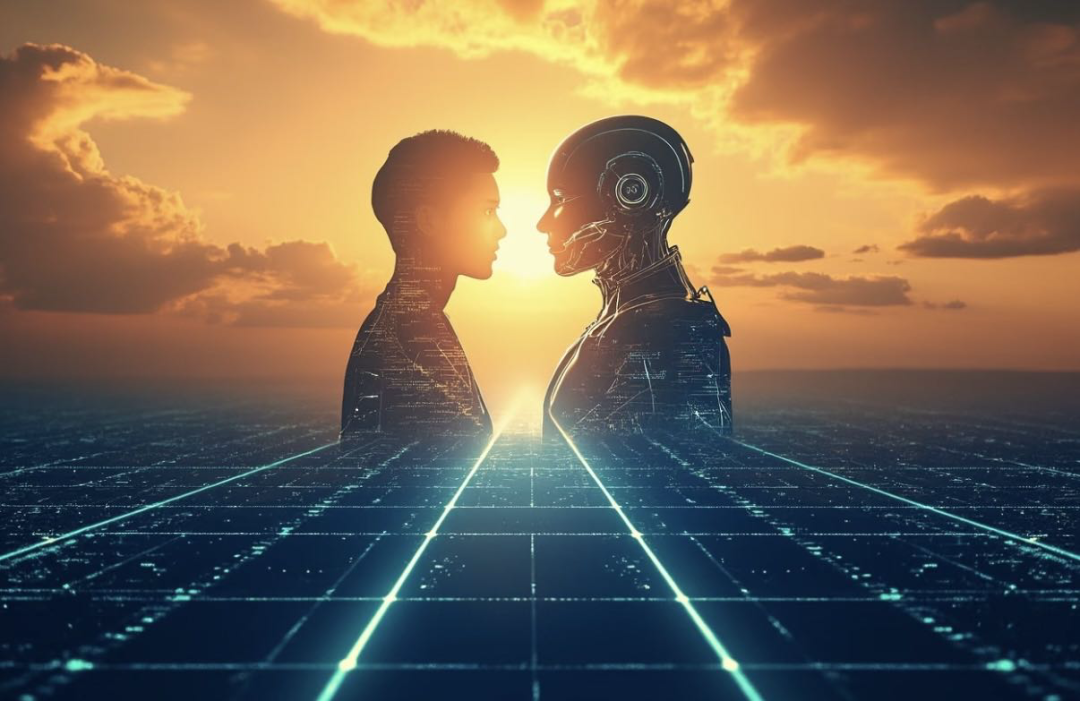
But at the same time, a deeper change is taking place:AI are having bodies.
Image

5. the real opportunity may be "physical intelligence"

In the past decade, artificial intelligence has mainly solved the problems of the digital world. AI can write articles, generate code and analyze data, but they can't really enter the real world. And there is another problem that is being tried to solve:If AI has a body, can it understand and change the real world?This may be the real long-term value of humanoid robots.
The robot of the future may no longer need a human to gradually tell it "what to do in the first step and what to do in the second step", but directly accept the task, and then complete the perception, understanding, planning and execution on its own.
When this ability matures, the humanoid robot is no longer just a mechanical device, but may become a person who can enter the real world to work.AI Agent。
Image

6. Western Technology: Exploring Body Intelligence and Smart Space

With the rapid development of humanoid robot industry, more and more scientific and technological enterprises focusing on physical intelligence and intelligent robot industry have emerged in China.
Xiwen Technology (XVIIN) focuses on the directions of body intelligence, bionic robots and intelligent space, and explores the integration and application of artificial intelligence, motion control, multi-modal perception and edge computing. Xiwen Science and Technology focuses not only on "what robots look like", but also on:What can a robot do when it enters real space?
In the future, the robot may no longer be an isolated device, but an important node in the intelligent space.
From the robot body, to environmental perception, to AI decision-making and task execution, the cooperation between robots and space, equipment and people will become an important direction for the further landing of physical intelligence.
Image

7. tuyere will pass, but the real technology will stay

If we must give a judgment to the humanoid robot industry:There may be bubbles in humanoid robots, but physical intelligence is not necessarily a bubble.The real valuable enterprise, the final fight is not how cool the robot is at the conference, but whether it can establish a complete technical and commercial closed loop:
Robot ontology perception system AI model motion control data closed-loop application scenario.
In the next few years, the humanoid robot industry is likely to experience capital cooling, technology iteration and market elimination.
Some companies will disappear and some concepts will ebb, but robots that can really enter factories, warehouses, commercial spaces and even homes may eventually become the next generation of intelligent infrastructure. So, instead of asking:"Is a humanoid robot a tuyere?"Why not ask:"Who can make a robot really work?"
The tuyere will eventually ebb and the bubble will eventually burst. But when AI really have a "body" that can touch, move and change the real world, a new technological revolution may have just begun.

Related recommendations

公众号二维码