News Details

N E W S   D E T A I L

AI会聊天只是开始:下一场革命,可能是机器人

AI will chat is just the beginning: the next revolution, possibly robots

2026-09-14 1 Reading
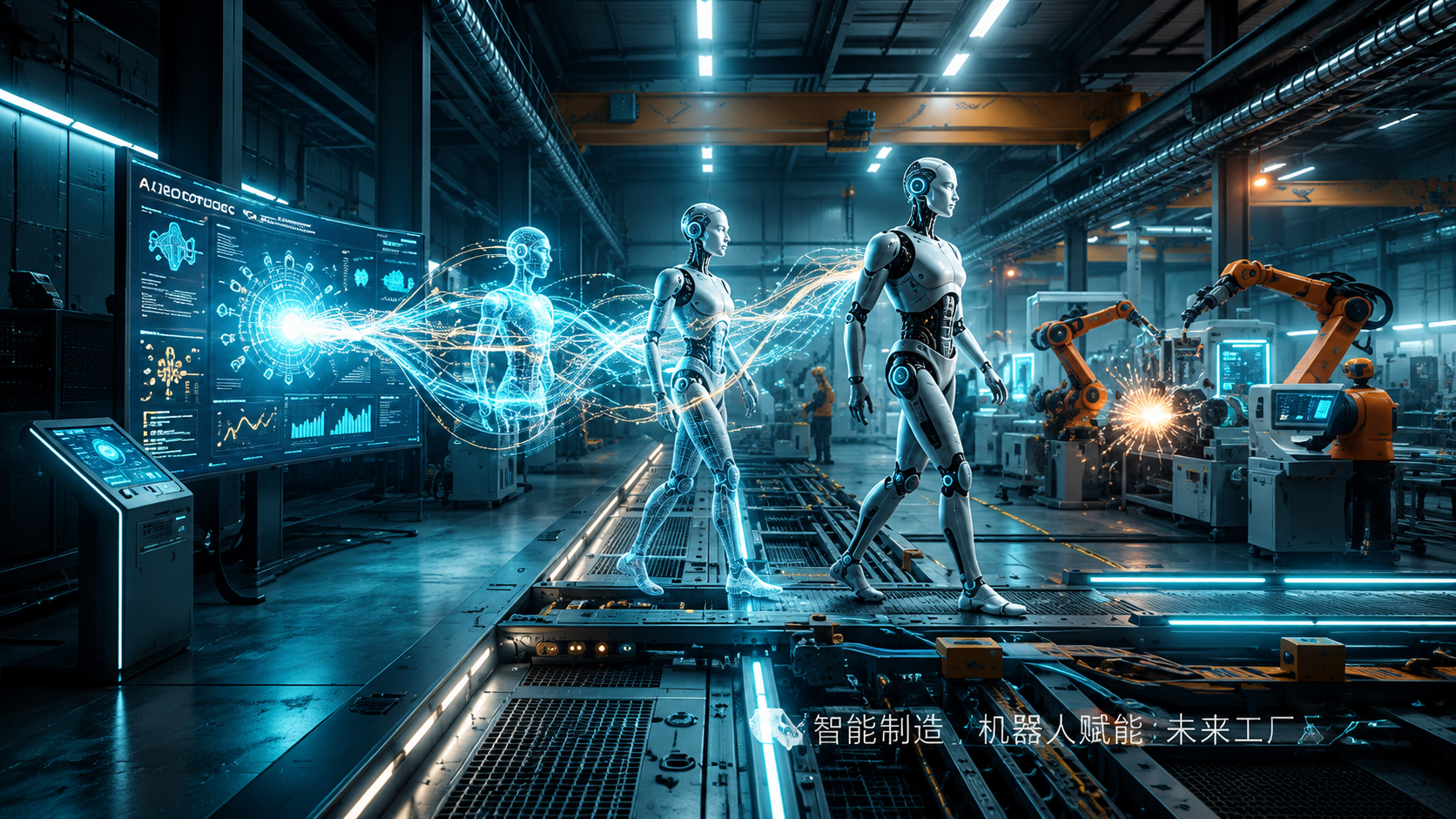
If the AI revolution of the past few years has changed “how we process information,” then the next AI revolution may change how we enable machines to act on our behalf. ChatGPT has made AI capable of chatting. AI agents allow AI to start doing digital tasks autonomously. Robots, on the other hand, have the opportunity to bring AI into the real world.

AI will chat is just the beginning: the next revolution, possibly robots

If the AI revolution of the past few years has changed “how we process information,” then the next AI revolution may change how we enable machines to act on our behalf. ChatGPT has made AI capable of chatting. AI agents allow AI to start doing digital tasks autonomously. Robots, on the other hand, have the opportunity to bring AI into the real world.

Why can't AI just stay on the screen?

The value of artificial intelligence is never just answering questions. There are a lot of jobs in the real world: handling, sorting, assembly, inspection, maintenance, cleaning, production, and so on.
These missions all have one thing in common: they require action. As the AI gets better at understanding tasks, people naturally expect it to do more. This is why robots are becoming a new important entrance to the artificial intelligence industry.
Image

From AI Agent to Robot Agent

In recent years, a very popular artificial intelligence concept is AI Agent. Traditional chat AI require us to enter commands over and over again. The AI Agent begins with an attempt to understand the goal. Make a plan. Call the tool. Perform tasks. Inspection results. Keep moving.
OpenAI will launch GPT-6 Astra in September 2026 and will further enhance computer operations, browsing, software engineering and professional work capabilities. OpenAI's simultaneous release of the Agents API continues to drive the evolution of AI from "answering questions" to "doing tasks. This gives an important signal:
AI agents in the digital world are becoming more and more like "executors". Robots, on the other hand, have the potential to become AI agents in the physical world.
Image

Why are robots an important vehicle for the next AI revolution?

Because robots have bodies. AI Agent can open a web page. Robots can open doors. AI Agent can read a report. A robot can inspect a piece of equipment. AI agents can schedule tasks. Robots can actually get the job done. Therefore, we can understand the future artificial intelligence as two worlds:
  • Digital AI: Digital Intelligence
  • Physical AI: Physical Intelligence
The former operates the computer. The latter operates the real world. The logic behind the two is actually the same:
Understand goals → make plans → perform actions → get feedback.
Image

Google is pushing big models into robots

In July 2026, Google DeepMind launched Gemini Robotics 2 to further advance full-body intelligence, allowing robots to use AI models to understand vision and language and perform complex actions. More importantly, Google also launched the Gemini Robotics ER 2. The model enhances spatial, temporal and physical reasoning and can help robots with multi-step task planning. This means:
The big model is gradually changing from a "language brain" to a "robot intelligence center".

Figure tells us: robots have begun to "go to work"

In 2026, Figure 03 will enter the BMW Spartanburg plant. Figure said that the previous generation of Figure 02 was involved in the BMW production system, while the new generation of Figure 03 began to try more complex logistics work.
The robot needs to operate during the movement and coordinate multiple parts of the body to complete the task. The meaning behind this is not "a robot entered a factory". The real concern is:
For the first time, AI are increasingly participating in real production via robots.

China is pushing robots from 'show' to 'work"

The development of China's robot industry is also entering a critical stage. The 2026 special action of the Ministry of Industry and Information Technology and the State-owned Assets Supervision and Administration Commission of the State Council clearly stated that real training should be carried out around manufacturing, warehousing and logistics, catering and retail, medical care, safety production, emergency rescue and other scenarios.
More importantly, the document proposes to continuously accumulate real machine data through real-life training, so that the model, robot ontology and application scenarios are constantly iterated. In other words: the real competition of artificial intelligence robots is shifting from "whose Demo is cooler" to "who can stably complete real work".

Humanoid robots are just the beginning

One thing to be clear is that physical intelligence is not the same as humanoid robots. The robot may be: a humanoid robot, a robotic arm, a robot dog, a wheeled robot, a mobile robot, an intelligent space system. What really matters is not what the machine looks like, but whether it has the artificial intelligence to understand and act.

Xiwen Technology: AI Robot Intelligent Space

Western Technology is concerned about the new scene after the combination of artificial intelligence and robots. When a robot has vision, language, motion control and environmental understanding capabilities, it is no longer just a hardware device. It may become:
AI new entrances into factories, commercial spaces, public spaces and future life scenes.
This is also the larger industrial background of products such as XViiN Western robots.

Related recommendations

公众号二维码