News Details

N E W S   D E T A I L

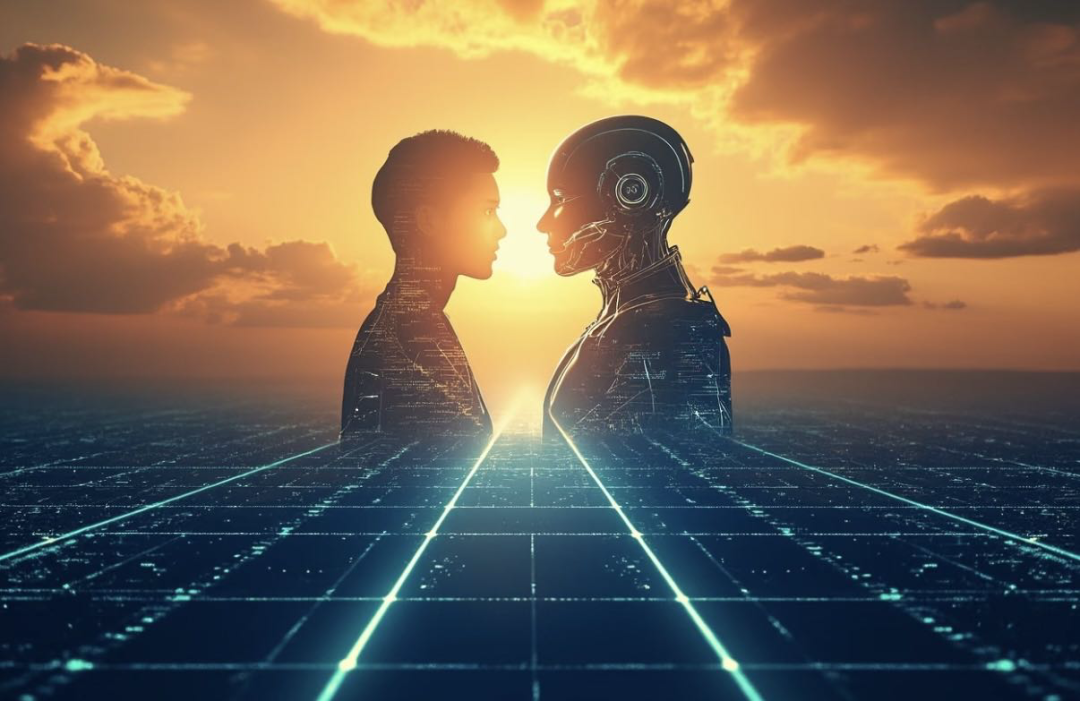
ChatGPT之后,AI为什么开始“长出身体”?

After ChatGPT, why do AI start "growing bodies"?

2026-09-14 1 Reading
Over the past few years, the most significant advancements in artificial intelligence have taken place behind the screen. ChatGPT has enabled machines to begin understanding language, generative AI has enabled them to start creating, and multimodal AI is gradually teaching machines to "see." Today, artificial intelligence is continuing to evolve in another direction: to get AI out of the screen and into the real world. This is why physical intelligence, humanoid robots, and Physical AI are becoming new hotspots in the artificial intelligence industry.

After ChatGPT, why do AI start "growing bodies"?

Over the past few years, the most significant advancements in artificial intelligence have taken place behind the screen. ChatGPT has enabled machines to begin understanding language, generative AI has enabled them to start creating, and multimodal AI is gradually teaching machines to "see." Today, artificial intelligence is continuing to evolve in another direction:
Get AI off the screen and into the real world.
This is why physical intelligence, humanoid robots, and Physical AI are becoming new hotspots in the artificial intelligence industry.

Image

AI will chat and just start

After the emergence of ChatGPT, many people really felt the ability of artificial intelligence for the first time. In the past, we needed to learn the operating logic of the software; now, we just need to tell AI the goal. Getting AI to write articles, analyze data, generate code, and produce solutions has become increasingly common. But a closer look reveals that these tasks have one thing in common:
It all happens in the digital world.
AI can tell us "what to do", but it may not be able to complete the tasks for us in the real world.
For example: "Bring the cups on the table." For humans, this is a very simple sentence. But for robots, it may include visual recognition, spatial understanding, target judgment, path planning, grasping control and action feedback.
In other words, what robots really need is not only a "talking brain", but also a body that can enter the real world.

From Big Language Models to Body Intelligence

This is exactly what is changing in AI technology. The first stage is the big language model. AI begin to understand words and language. The second stage is multimodal AI. AI began to process text, pictures, video and sound at the same time. The third stage is the VLA, which is the visual-language-action model. AI should not only know "what we see", but also further judge: "what should we do next?"
Google's DeepMind release of Gemini Robotics 2 in July 2026 is a further step in this direction. The model emphasizes moving from vision and language understanding to robot actions, and pushes the robot to gain full-body control, dexterous operation and collaboration capabilities.
At the same time, Google also launched Gemini Robotics On-Device 2, which further pushes the VLA model to local robotic devices, allowing artificial intelligence to more directly participate in task execution in real-world environments.
The meaning behind this is:
AI are moving from "generating content" to "generating action".
Figure: Artificial intelligence enters the factory
If robots used to be displayed more in the laboratory, now more and more robots have begun to accept the test of the real industrial environment.
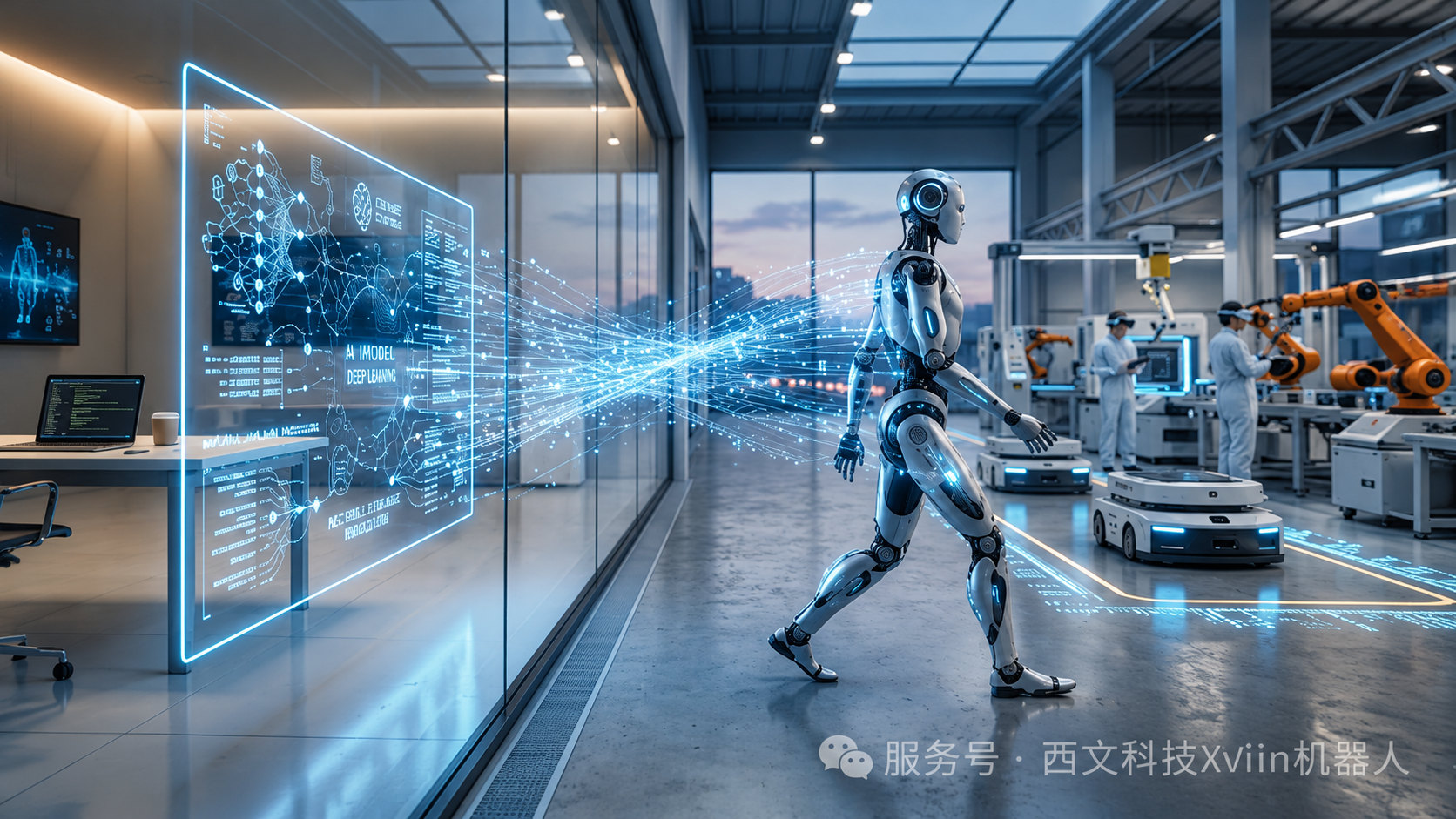
In June 2026, Figure 03 enters the BMW US Spartanburg plant.
Figure revealed that the previous generation of Figure 02 had already participated in BMW-related production processes in 2025, while the new generation of Figure 03 further performed more complex logistics tasks.
More importantly, its Helix 02 VLA system needs to coordinate the robot's hands, arms, torso and steps to allow the robot to complete the operation during the movement.
This means that humanoid robots are gradually moving from: "Will it go?" to: "Can it work?" These two questions seem to be only a few words different, but behind it is the leap of the entire artificial intelligence robot industry.
Image

China is also pushing AI into the real scene

Artificial intelligence to enter the industry, must rely on real data. In June 2026, the Ministry of Industry and Information Technology and the State-owned Assets Supervision and Administration Commission of the State Council jointly launched a special campaign for the 2026 practical training of humanoid robots and physical intelligence. The policy clearly states that training should be carried out around real scenes such as manufacturing, warehousing and logistics, medical care, safe production, emergency rescue, etc., continuously optimize the physical intelligence model through the real environment, accumulate high-quality real machine data, and promote the closed loop of "real-life training-data precipitation-product iteration-scale deployment.
By the end of 2026, the goal is to form more than 100 high-value application scenarios and promote the formation of a 10,000-unit scale landing capability.
This shows that China's physical intelligence is changing from "display ability" to "operation ability.
Image

Why do AI need a body?

Because what the real world ultimately needs is action. AI can analyze the warehouse. Robots can actually walk into the warehouse. The AI can determine that the device is abnormal. The robot can walk over and inspect. AI can tell us how to carry it. Robots can actually do the moving. Therefore, artificial intelligence to truly enter the real world, need to form a complete closed loop:
Perception → Understanding → Planning → Action → Feedback → Learning.
This is the core of physical intelligence.
Image

Conclusion

In the past, the most important question for AI was: "Do AI understand it?" Today, the question is becoming: "Can AI do it?" ChatGPT for AI to learn to communicate, multimodal AI for AI to begin to understand the world, and avatar intelligence for AI to have a body to enter the world. AI growing bodies doesn't mean robots are becoming more like people. What really matters is that artificial intelligence is finally starting to have the ability to change the real world.

Related recommendations

公众号二维码