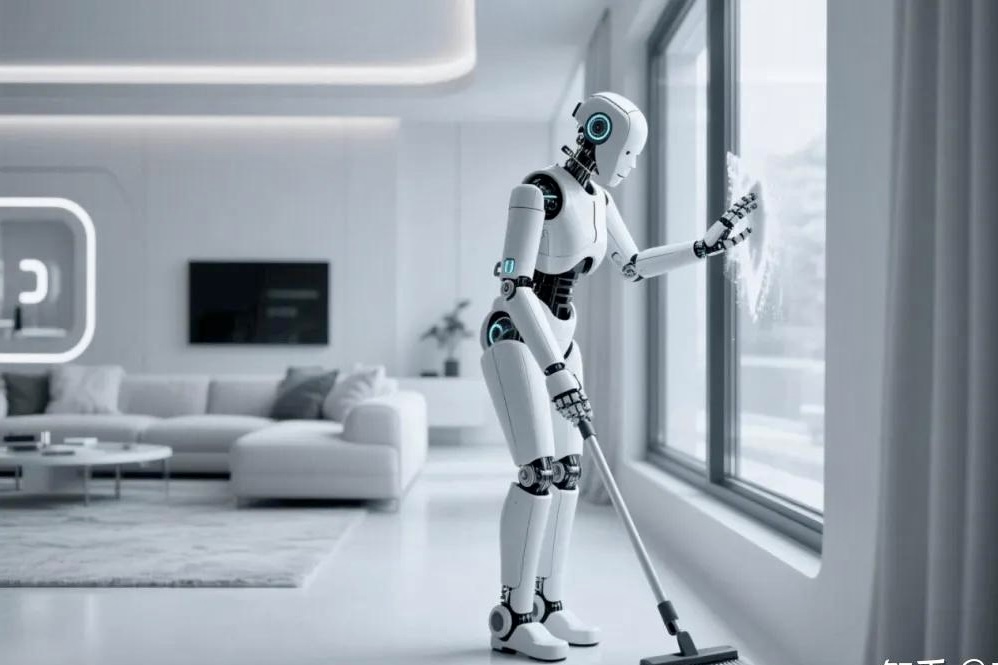
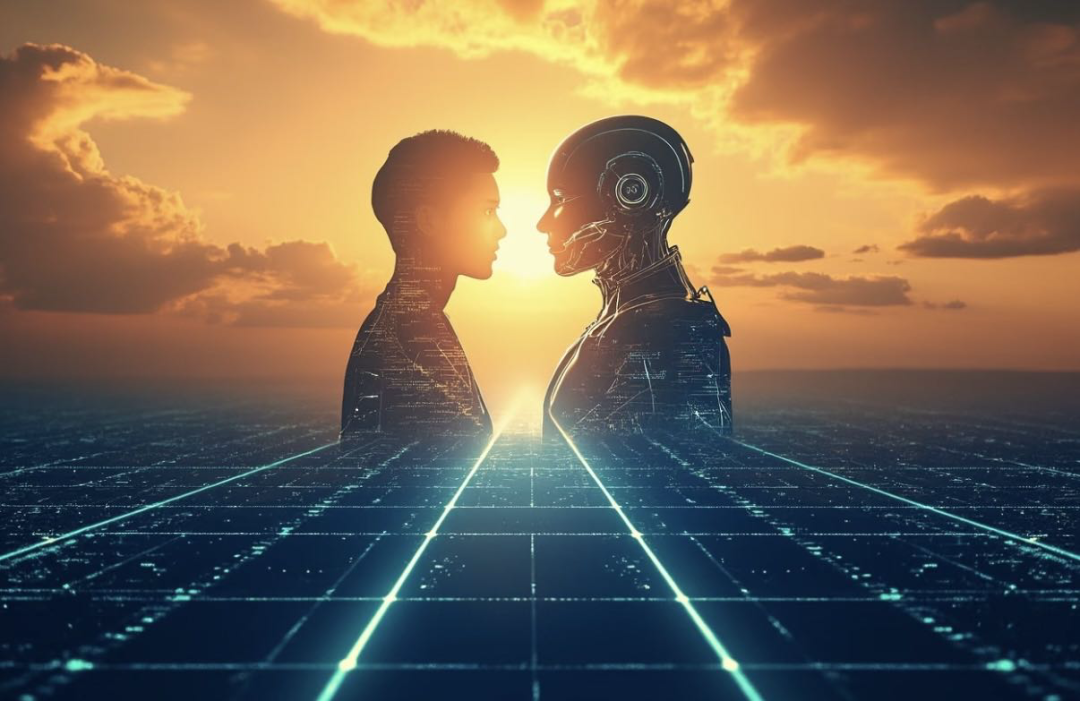
Have you ever wondered why although AI can write poems, draw pictures and chat, they still can't carry their own cups of coffee, avoid obstacles, or even distinguish between "left hand" and "right hand"?The answer may be hidden in one sentence: true intelligence cannot be separated from the "body".This is the most advanced direction in the field of artificial intelligence in recent years-physical intelligence (Embodied Intelligence)
What is physical intelligence?
To put it simply, avatar is to make artificial intelligence not only "think", but also "act"-through a physical or virtual body, it can interact with the environment in order to gain an understanding of the world.Our human intelligence has never been created out of thin air.How did you learn to "hold the cup"? Does it rely on repeated simulations with your brain, or does it rely on reaching, grasping, missing, and adjusting over and over again?It is the feedback of the body that allows the brain to constantly revise cognition. This process is * * physical learning * *.Traditional AI is like a human being who always sits in a room and thinks with his eyes closed-it can read thousands of books, but never goes out to feel the wind, temperature, gravity and collision.Why do AI need a "body"?
1. Perception must come from experience
Having seen a thousand pictures of cats, you really "know" cats. Only when you have touched a cat's hair, heard a cat call, and been caught by a cat can you truly understand what a "cat" is.Body intelligence allows AI to "learn" knowledge from the real world through multi-modal perception such as vision, touch, and movement.2. Action Shaping Cognition
For example, if a robot wants to understand the action of "push", it is not enough to describe it in words. It must try to push objects of different weights, feel resistance, inertia, balance......It is these physical experiences that allow it to establish a deep understanding of "force", "momentum" and "spatial relations.3. Adapt to the complex reality environment
The real world is full of uncertainty: light changes, uneven ground, sudden interference......Only through continuous physical interaction can AI develop robustness (Robustness) and respond to accidents as flexibly as humans.What is AI changing?
✅Home Robot: In the future, sweeping robots will no longer only circle around, but will be able to identify dirt types, judge cleaning methods, avoid pets, and even help you wring out mops.✅Medical assistance robot: surgical robot can not only listen to instructions, but also adjust the strength in real time according to the elasticity of the organization, like a surgeon "feel".✅Industrial automation: The flexible robotic arm can independently grab the special-shaped parts on the production line without fixed tooling, greatly reducing the cost of changing the line.✅Education and rehabilitation: Adaptive teaching robots can observe students' expressions and movements, dynamically adjust the teaching rhythm, and help autistic children build social skills.Current challenges: from "active" to "understanding"
Despite the rapid progress, AI still faces many challenges:Bionic body is too expensive: High-precision sensors, compliant drives, and joint design make an experimental robot cost hundreds of thousands.Low training efficiency: The real world trial and error costs are high, and the simulation environment is "not real".Safety and Ethics: When a robot starts to "act autonomously", how to ensure that it does not hurt people? How to define responsibility?But these problems are giving birth to new technological breakthroughs-such as the fusion training of the neural control network physical simulation engine, which allows robots to "practice for ten years" in the virtual world and then migrate to reality.The future is here: not just "tools", but "partners"
We are entering a new phase: the AI of the future is no longer a cold algorithm, but a "physical existence" that has a body, can perceive, can learn, and can cooperate ".They may not speak, but they can read your gestures;They may not understand emotions, but they can sense and respond to changes in your mood;They may even know the boundaries of the "body" better than you do-because they are "living" intelligence with the body.Conclusion: Intelligence begins with the body
The essence of physical intelligence is a philosophical revolution about how to understand the world.It tells us that intelligence is not a solo dance of the brain, but a symphony composed by the body and the world.If you also believe that real intelligence should be "visible, tangible, and movable", then please pay attention to us and witness this transformation from "digital brain" to "real body.We do not do the theoretical school of "talking on paper", but only the practitioners who promote the landing of physical intelligence.Pay attention to [our public number] for cutting-edge technology interpretation, industry case dismantling, and future scenario rehearsals.The content of this paper is based on the latest academic research and industrial practice, data sources: MIT CSAIL, DeepMind, IEEE Robotics, Institute of Automation, Chinese Academy of Sciences, etc.