News Details

N E W S   D E T A I L

当AI拥有“身体”:一文读懂具身智能

When AI Have "Bodies": Understanding Body Intelligence in One Article

2026-10-21 1 Reading
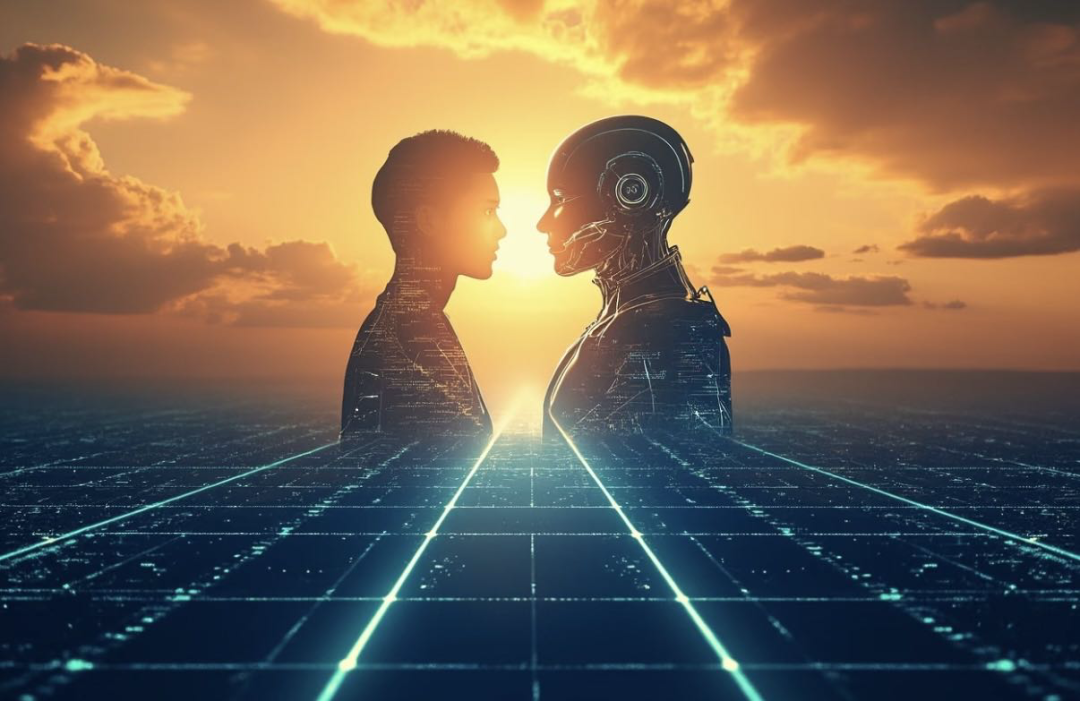
When AI Has a “Body”: Understanding Embodied Intelligence in the Past Few Years. In recent years, artificial intelligence has been transforming our lives at an unprecedented pace. From chatbots that can answer questions and write articles to multi-modal big models that can understand pictures, analyze videos, and generate code, AI are getting smarter ". But if we think further: in addition to being able to speak, see and think, can AI really enter the real world? For example, when we say to a robot, "Please take the cup on the table to the kitchen." Can it understand the instructions, find the cup, plan the route, and really accomplish this task?

When AI Have "Bodies": Understanding Body Intelligence in One Article

In the past few years, artificial intelligence is changing our lives at an unprecedented speed. From chatbots that can answer questions and write articles to multi-modal big models that can understand pictures, analyze videos, and generate code, AI are getting smarter ". But if we think further: in addition to being able to speak, see and think, can AI really enter the real world? For example, when we say to a robot, "Please take the cup on the table to the kitchen." Can it understand the instructions, find the water cup, plan the route, and actually complete the task? This is the direction that **physical intelligence (Embodied AI) is exploring.
Image

1. what is physical intelligence?

Put simply, AI is the ability to perceive the real world, understand the environment, make decisions and take actions autonomously. Traditional artificial intelligence primarily processes information in the digital world. We ask the AI a question, it can give an answer; upload a picture, it can identify the content; enter a code, it can help us analyze and modify. But the real world is more complex. For a robot to complete the simple task of “picking up a cup,” it must first use sensors such as a camera to observe the environment and identify the positions of the table and the cup; then it must interpret the user’s verbal command to determine the appropriate course of action; next, it plans its motion trajectory and controls the robotic arm and dexterous hand to execute the grasp; if the cup moves or an obstacle appears along the way, it must reassess the situation and adjust its actions accordingly. Therefore, embodied intelligence effectively forms a complete closed loop: perception → understanding → decision-making → action → feedback → learning. It enables AI to move beyond “understanding information” and further toward “interacting with the world.”

Why do 2. AI need a body "?

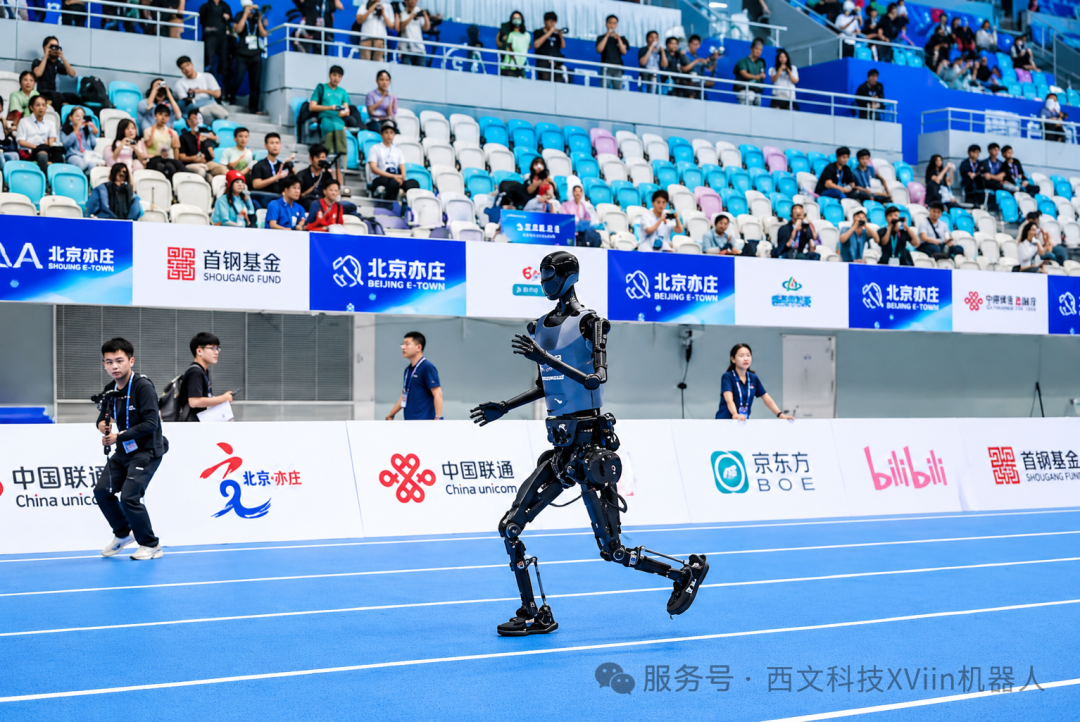
We can simply understand physical intelligence as: the body of an artificial intelligence brain robot
Image
Body. Large models are responsible for understanding language, knowledge and tasks; visual models help AI understand the environment; cameras, force sensors and other equipment are responsible for obtaining real-world information; robot ontology is responsible for performing actions. In other words, the "body" of the robot is not a simple mechanical structure, but an interface between the AI and the physical world. For humans, we observe the world through our eyes, acquire sound through our ears, interact with the environment through our hands and feet, and form an understanding of the world in the process of constant action and feedback. Body intelligence hopes to build similar capabilities. Therefore, future robots not only need to "understand people's words", but also need to know where objects are, how far away they are, how to grasp, how to move, and what to do next.

3. VLM and VLA: Moving AI from Understanding to Action"

VLM and VLA are two important technical concepts in the development of physical intelligence. VLM, or Vision-Language Model, mainly solves the problem of AI understanding visual information. For example, if a robot faces a room, VLM can help it identify tables, chairs, water glasses, and other objects in the room and understand the relationship between these objects. It can be simply understood as: VLM, let AI understand the world. The VLA, or Vision-Language-Action Model, further connects vision, language and robot action. For example, when the user says "pick up the red cup", the VLA not only needs to understand this sentence, but also needs to combine the visual information to find the red cup and further generate an action that the robot can perform. Thus: VLM solves the "see" problem, and VLA further solves the "how" problem. This is also an important step in artificial intelligence from the digital space to the physical space.

Image

What scenarios will 4. physical intelligence go?

The potential applications of physical intelligence are vast. In the field of industrial manufacturing, robots can complete tasks such as assembly, handling, and testing, and adapt to more complex production environments. In the field of warehousing and logistics, robots can carry out sorting, handling and distribution to improve logistics efficiency. In the home scene, future robots may be able to complete tasks such as tidying up the room, packing up items, and simple cooking. In addition, in the fields of medical treatment, agriculture, commercial services, hazardous environment operations, etc., the application of body intelligence also has great potential. Compared with traditional automation equipment that can only execute fixed programs, the more important value of avatar intelligence is to enable robots to understand the environment and complete tasks autonomously according to different situations.

Image

What is the real challenge of 5?

Of course, physical intelligence is still in rapid development. One of the biggest challenges is how robots adapt to the uncertainty of the real world. The environment is not a laboratory. Objects will move, light will change, and people will suddenly appear in front of the robot. More importantly, robots need to be able to generalize. If the robot can only hold a certain kind of cup it has been trained to hold, it will still be more like an automated machine. True physical intelligence requires facing objects, unfamiliar environments, and new tasks that have never been seen before, and being able to use existing knowledge to judge and learn. Therefore, the development of physical intelligence requires not only stronger large models, but also the joint progress of many technologies such as robot ontology, sensors, motion control, world models, and real-world data.

6. from "thinking" to "acting"

Judging from the development process of artificial intelligence, we are undergoing an important change. AI used to be primarily responsible for processing information, and later began to understand information, and today, we are trying to make AI further understand the real world and take action. This means that the boundary of artificial intelligence is gradually moving from behind the screen to the real space. When AI has a "body", it will no longer be just words, pictures and codes, but factories, warehouses, homes, streets and the whole real world. Let machines understand the world, understand the world, and truly participate in the world-this is perhaps the most anticipated meaning of body intelligence. What we see today may only be the beginning of this change.

Related recommendations

公众号二维码